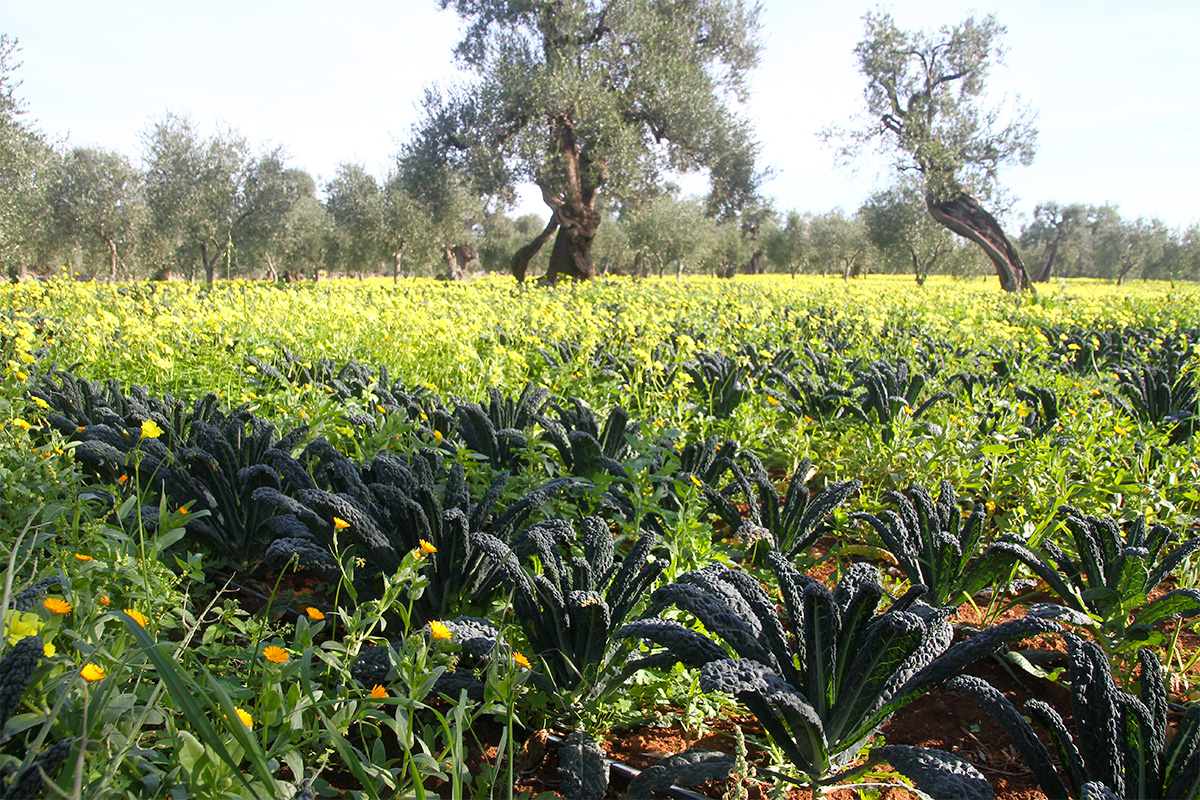
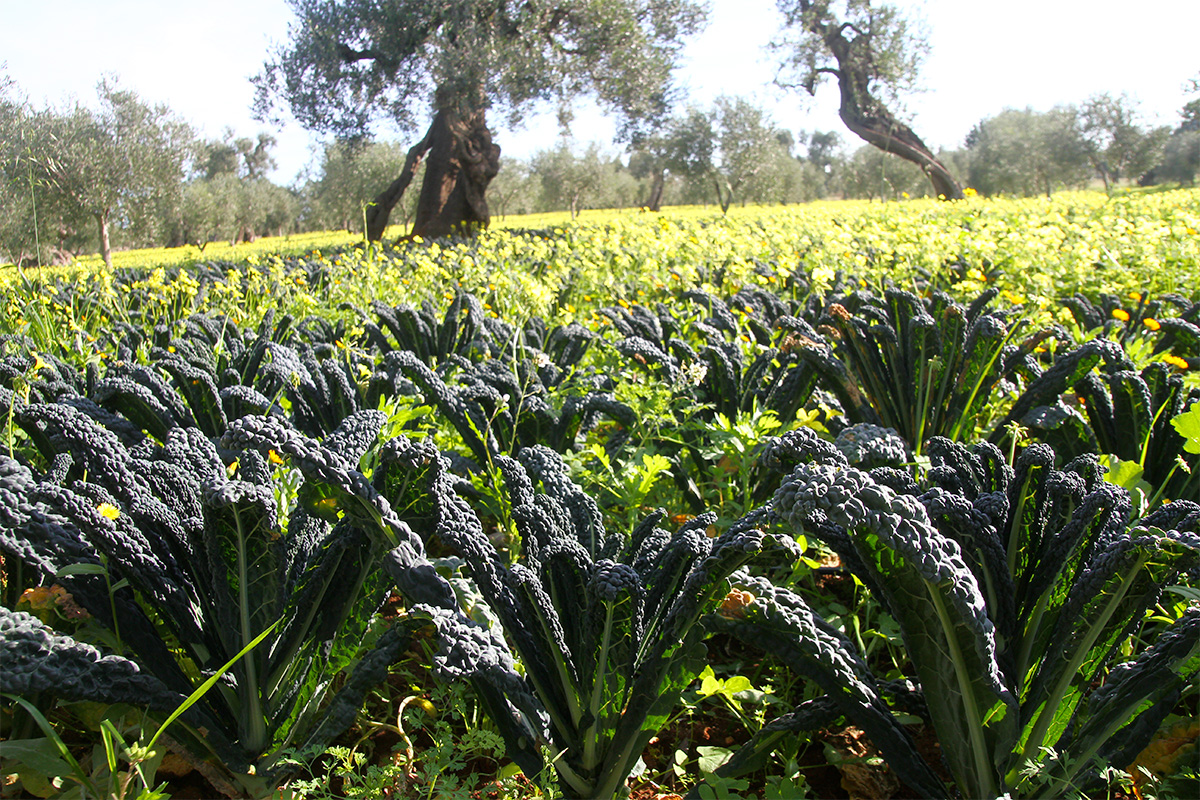
The choice to embrace organic farming comes from afar and is rooted in the desire to respect, preserve and enhance a heritage of excellence inherited from our ancestors.
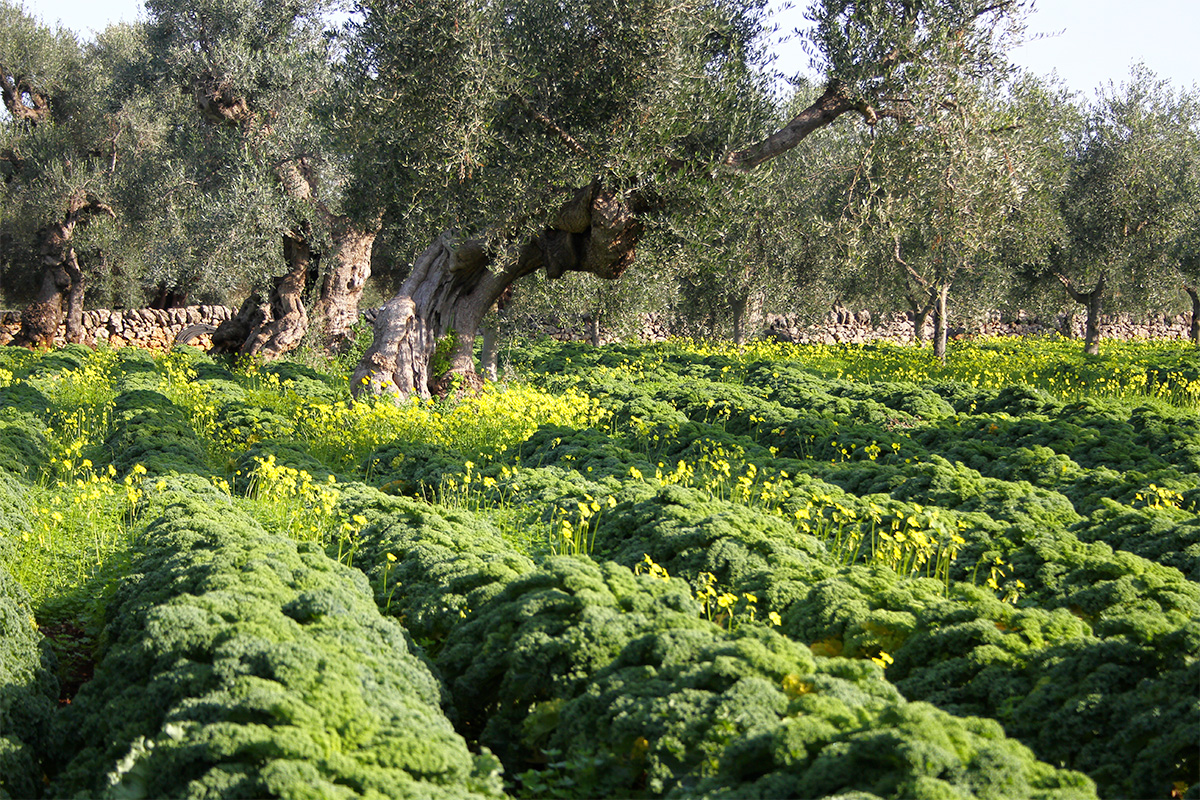
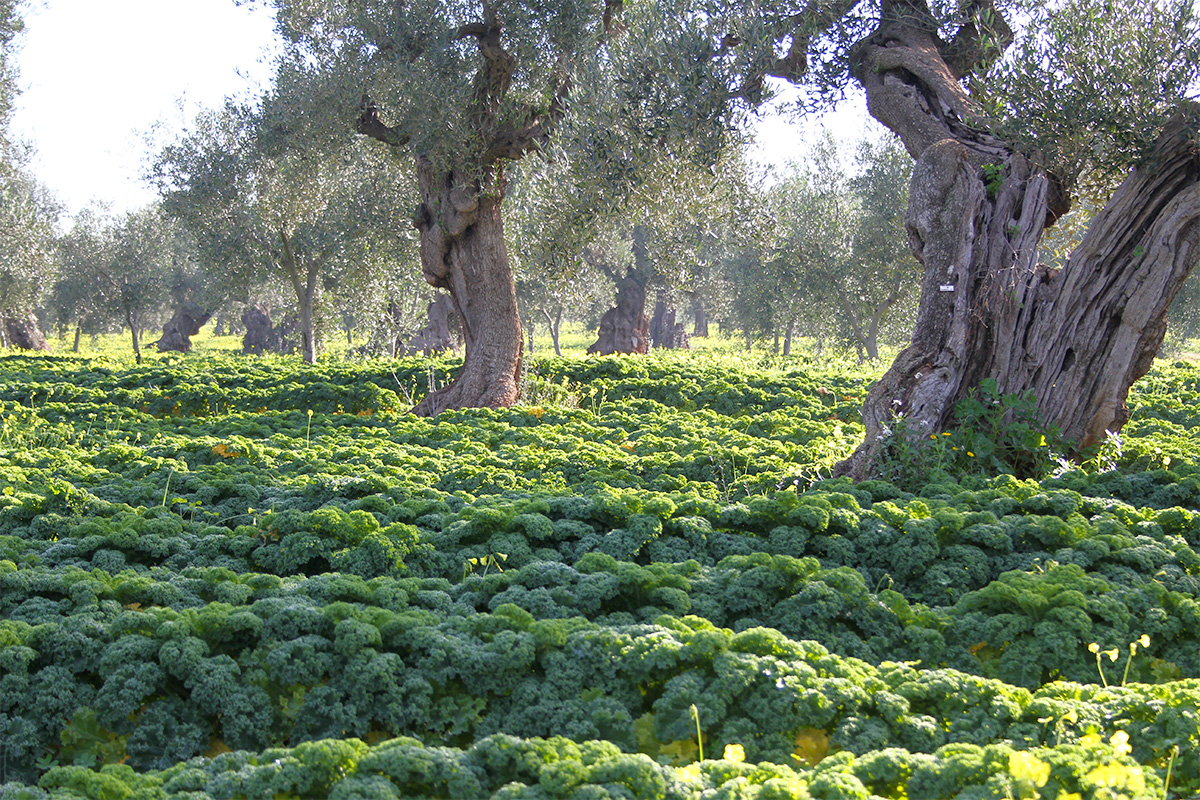
We are in the territory of Fasano, a municipality completely immersed in the “Piana degli Ulivi Monumentali” recently included in the National Register of Historical Rural Landscapes and which contains the highest concentration of millenary olive trees in the Mediterranean.
The Piana degli Oliveti represents a “historical-geographical unicum” still intact that summarizes the agrarian history of the Mediterranean landscape. A story linked to the production, processing and marketing of olive oil, since the Messapian age. A visible cultural “Document” that tells and describes the evolution of the entire environmental agrosystem.
The territory of Fasano also includes the Regional Natural Park of the Coastal Dunes from Torre Canne to Torre San Leonardo and the Archaeological Park of Egnazia. The coast of the Municipality of Fasano has also been awarded the Blue Flag by the FEE for years.
In this context, the agri-food sector has always been characterized by quality productions and local policies implemented to ensure added value to typical agri-food productions and to ensure the maintenance of the rural landscape.
the DOP
Hill of Brindisi
Garrison Slow food
Tomato Fiaschetto
of Torre Guaceto
Garrison Slow food
Regina Tomato of Torre Canne
Foundation on the Mediterranean Diet
Promotion of typical products in Puglia.
Project pilot
Road of the Agricultural Park of the Secular Olives of the Alto Salento
Project pilot
Idlebregion Olive Road (Syria)
Project NOVAGRIMED
Agricultural Innovations in the Mediterranean Area – Transnational Cooperation Program MED 2007 – 2013, regarding the implementation of good practices and the realization of the pilot project of the Bio-Itinerary “The Via Traiana”.
Project Biolage
He loves oil to make known the existence of organic extra virgin olive oil monovarietal “Ogliarola salentina” certified organic obtained only from monumental plants surveyed by the Puglia Region
The choice of organic farming was therefore for us the only possible path to demonstrate even more concretely the love for our land and our products. To give them a sustainable and lasting future in a territory as unique as it is to be protected.
Fasano and its gardens
The city of Fasano is located in a flat area at 111 meters above sea level. The municipal territory marks the border between northern Salento and Murgia.
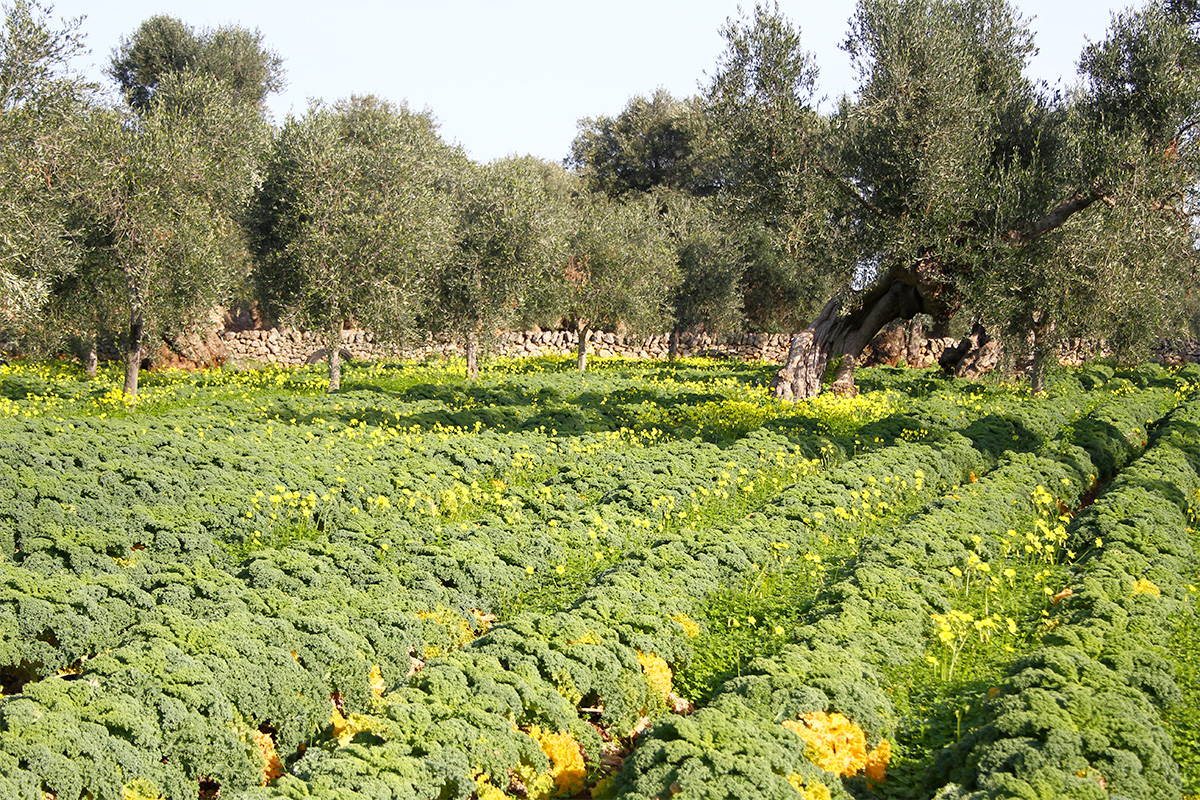
The hills and the plain are made up of limestone, with few karst cavities. The elements of significance of the historical landscape derive from the particular morphology of the territory. In this context, the terraces characterize the olive and agricultural plots to which various dry constructions alternate; Walls, bridges, canals, which alternate with farms, the first “trulli” and “casedde”.
There are many arable crops associated with olive groves. Gardens that have a high importance for the whole landscape and that represent the trophic reserves of many species of birds and beyond.
A unique landscape, admired by tourists and locals. The result of human care when he takes care of nature with respect and passion.